Wenzhou Zungwan - Packaging Machinery Equipment Manufacturers

- All
- Product Name
- Product Keyword
- Product Model
- Product Summary
- Product Description
- Multi Field Search


Views: 0 Author: Site Editor Publish Time: 2026-09-08 Origin: Site


Procuring a pharmaceutical filling machine requires balancing strict regulatory compliance with operational throughput. You cannot afford mistakes in this high-stakes sector. Unlike standard consumer packaging, pharmaceutical filling demands zero-defect precision. It also requires rigorous cross-contamination prevention and verifiable sterility. These machines must protect product integrity from the first vial to the last.
Finding the right equipment means navigating complex specifications. You need a system built for your exact product viscosity and container type. This guide breaks down how to evaluate, shortlist, and specify filling equipment based on your formulation. We will cover processing high-viscosity syrups, metered sprays, and sensitive diagnostics. By the end, you will understand how to align hardware capabilities with industry standards. You can then make confident procurement decisions for your production line.
Pump selection (peristaltic vs. piston) must dictate the machine choice based on fluid sensitivity and required cleaning protocols.
Integrating a combined pharmaceutical filler and capper reduces footprint and minimizes contamination risks between indexing stations.
Vendor evaluation must prioritize comprehensive IQ/OQ/PQ documentation and proven cGMP compliance over baseline equipment costs.
Dedicated machine architectures are required for distinct formats (e.g., nasal spray filling machines require precise micro-dosing and specialized crimping).
Deploying new filling equipment demands a clear understanding of your success criteria. You must align engineering capabilities with business goals. Production managers often focus on throughput. However, long-term success relies heavily on regulatory adherence and dosing accuracy.
Equipment must meet cGMP and FDA standards without exception. Regulators look closely at material surfaces. Direct contact parts typically require 316L stainless steel. You must look for sanitary welds and crevice-free designs. These features prevent microbial growth. Industry standards dictate a surface roughness average (Ra) of less than 0.8 micrometers for fluid paths. Machine designers must eliminate dead legs in piping. They should slope all tubing to allow complete drainage. If a machine fails a compliance audit, your entire line halts.
Precision matters immensely when handling expensive active pharmaceutical ingredients (APIs). You must calculate the cost of product giveaway. A tiny overfill margin multiplies rapidly over a high-speed shift. Servo-driven dosing systems provide high precision. They adjust fill volumes on the fly. This prevents costly API waste. It also ensures patient safety by preventing dangerous underfills. Upgrading to a highly accurate system often pays for itself rapidly through yield optimization alone.
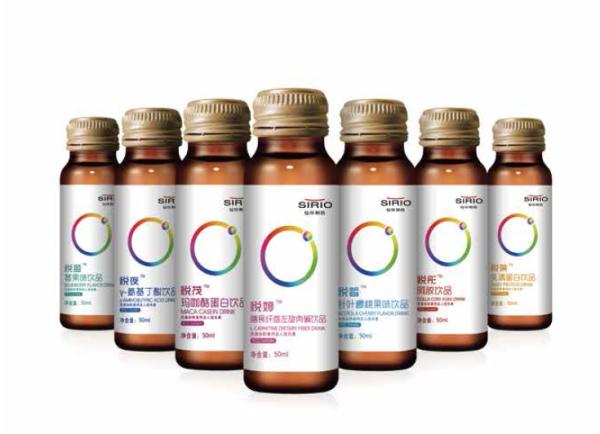
Every product formulation behaves differently. Your container choice dictates the handling mechanisms. You cannot use a generic filler for specialized medical products.
Syrups and pediatric suspensions pose unique challenges. They range from thin liquids to highly viscous gels. liquid filling machine designs must manage varying viscosities effortlessly. You must prevent foaming or splashing during high-speed fills.
Your primary evaluation node here is diving nozzle capabilities. Bottom-up filling mechanics solve foaming issues. The nozzle descends to the bottom of the bottle. It rises slowly as the liquid fills. This keeps the nozzle tip submerged. Submersion prevents aeration and splashing. You should also evaluate the shut-off valves. Anti-drip nozzles keep the indexing stations clean. This stops sticky syrups from fouling the conveyor belts.
Sprays demand entirely different mechanical handling. A nasal spray filling machine focuses heavily on micro-dosing accuracy. You might fill only 10ml to 15ml per bottle. It also requires integrated handling of complex spray pumps and long dip tubes.
Dip tubes often curve during transit. They tangle easily in vibratory sorting bowls. You need specialized alignment systems for automated pump insertion. The machine must guide the curved tube straight into the narrow bottle neck. Pre-crimping verification is another critical evaluation node. The system must confirm the pump sits perfectly flush before crimping. A misaligned crimp compromises the sterile barrier and ruins the product.
Diagnostic reagents involve very small, often unstable vials. A reagent tube filling machine handles small-footprint tubes in high volumes. Cross-contamination mitigation is paramount in diagnostic manufacturing. A single stray drop can ruin a test batch.
Since these lightweight tubes tip over easily, you must evaluate puck systems. Pucks securely hold the tubes during transit. They provide stability across the filling and capping stations. Specialized capping torques ensure diagnostic integrity. If the cap is too tight, it damages the fragile tube thread. If too loose, the reagent evaporates. Servo-driven cappers provide the exact torque feedback required for valid test kits.
After defining your product format, you must look under the hood. The mechanical architecture determines how efficiently your operators can run the line.
Your pump choice defines your cleaning validation strategy. It also dictates what fluids you can process successfully.
Piston pumps are best for viscous liquids and thick suspensions. They pull fluid into a cylinder and push it out mechanically. They offer high durability and massive push force. However, they require rigorous manual tear-down for cleaning. They contain many O-rings and seals.
Peristaltic pumps work well for sterile, thin liquids and sensitive biologics. Rollers squeeze a flexible tube to move the fluid. The product only contacts the disposable tubing. It never touches the machine hardware. This makes changeovers rapid. You simply swap the tube. It completely eliminates cross-contamination risks.
Piston vs. Peristaltic Pump Comparison
Evaluation Feature | Piston Pumps | Peristaltic Pumps |
|---|---|---|
Viscosity Handling | Excellent for thick gels, creams, and syrups. | Best for thin, water-like liquids and biologics. |
Cleaning Process | Requires disassembly, scrubbing, and seal replacement. | Simple tube disposal. Zero equipment tear-down. |
Cross-Contamination Risk | Moderate to high if validation protocols fail. | Virtually zero due to single-use fluid paths. |
Shear Force on Fluids | High. Can damage delicate protein structures. | Low. Gentle on live cells and complex APIs. |
Cleaning downtime kills production efficiency. You must assess automated cleaning cycles versus manual teardown requirements. CIP systems flush the fluid path with specialized detergents and purified water automatically. SIP systems use clean steam to sterilize the lines.
You must evaluate the verifiability of these processes. Validation audits require proof. Your machine needs sensors to monitor flow rates, temperatures, and chemical concentrations during the CIP cycle. Spray balls must provide 360-degree coverage inside holding tanks. A riboflavin test during installation will confirm the spray actually reaches every hidden corner.
Space in an ISO-certified cleanroom costs a premium. Many manufacturers turn to integrated systems. A pharmaceutical filler and capper monoblock combines both processes on a single chassis.
This integrated architecture drastically reduces your required floor space. It also limits risk. In a traditional inline sequential setup, open bottles travel down a long conveyor. They face prolonged exposure to the cleanroom environment. In a monoblock, the bottle indexes immediately from the filling needle to the capping turret. The open time shrinks to mere seconds. This protects sterility. Monoblocks use a central star-wheel to move the containers precisely. This mechanical synchronization prevents bottle jams and spills.
Even the best machine will fail if your facility is not ready. Proper implementation requires rigorous site preparation. You must align the machine with your operational realities.
You must match the machine’s isolation capabilities to your cleanroom class requirements. Basic lines might use a Restricted Access Barrier System (RABS). RABS provides physical doors and localized laminar airflow. Highly sensitive sterile injectables require full isolators. Isolators completely separate the operator from the filling zone using heavy glove ports. They run automated bio-decontamination cycles using vaporized hydrogen peroxide (VHP). Ensure your HVAC systems can handle the specific air pressure requirements these barriers demand.
Vendors frequently promise "tool-less changeovers." You must scrutinize these claims carefully. Identify the true downtime when switching formats. Moving from a 10ml diagnostic tube to a 100ml syrup bottle involves many parts. You have to change star-wheels, guide rails, nozzles, and capping chucks.
Best Practice: Ask vendors to demonstrate a full changeover on video.
Best Practice: Use color-coded change parts to prevent operator confusion.
Common Mistake: Failing to buy dedicated parts carts. Storing parts randomly leads to damage and missing pieces.
The Factory Acceptance Test happens at the vendor's facility before shipping. You must simulate real production conditions. This step is non-negotiable.
Ship your exact bottles, caps, and spray pumps to the vendor. Small dimensional variations cause major jams.
Provide a fluid proxy. If you run a sticky syrup, do not test the machine with plain water. Water behaves differently.
Test the safety interlocks. Open a guard door during a high-speed run. Ensure the machine stops immediately.
Run a continuous batch for at least four hours to identify thermal faults or timing drifts.
Buying pharmaceutical equipment is a long-term partnership. The vendor provides much more than raw steel. They provide the compliance backbone for your facility.
Does the vendor provide comprehensive, audit-ready validation packages? Or is it an expensive afterthought? Installation Qualification (IQ), Operational Qualification (OQ), and Performance Qualification (PQ) documents are mandatory. They prove to regulators your machine runs as intended. A trustworthy vendor maintains a dedicated validation team. They should offer a detailed traceability matrix. This matrix links every functional requirement directly to a specific test protocol.
Evaluate their Service Level Agreement (SLA) terms. Technician proximity matters when a line goes down. You cannot wait weeks for an international engineer. Look closely at the component usage. Do they use standard, off-the-shelf PLCs and pneumatics from major brands like Siemens or Allen-Bradley? Proprietary electronics lock you into the vendor. Standard components allow your local maintenance team to buy replacements easily.
You must create a User Requirement Specification (URS) document before requesting quotes. Do not let the vendor write the requirements for you. Your URS should clearly define:
Required throughput (bottles per minute).
Specific product characteristics (viscosity, foaming tendency, temperature).
Available cleanroom floor space and ceiling height.
Required data logging and 21 CFR Part 11 software compliance.
A detailed URS forces vendors to quote accurately. It eliminates hidden costs down the road.
Selecting the right equipment is an exercise in meticulous risk mitigation. The best strategy aligns pump technology directly with your fluid characteristics. It embeds regulatory compliance deeply into the mechanical design. You must prioritize features preventing contamination and boosting accuracy. High-precision machinery protects your costly APIs and secures patient safety.
For your next action steps, start by finalizing your internal URS. Detail your exact viscosities, container dimensions, and environmental constraints. Prioritize vendors offering proven, robust IQ/OQ/PQ frameworks out of the box. Finally, always demand empirical testing during the FAT. Run your specific liquid, spray, or reagent formats continuously. Verifying performance before shipping guarantees a smooth site installation.
A: Standard volumetric accuracy typically ranges from ±0.5% to ±1%. This depends heavily on the chosen pump technology and the target fill volume. Servo-driven piston pumps achieve tighter tolerances on larger volumes. Peristaltic pumps maintain extreme precision on very small micro-doses.
A: Technically yes, but practically it presents major risks. Changeovers between diverse formats require swapping fluid paths, nozzles, and capping turrets. This introduces severe cross-contamination risks and demands lengthy cleaning validation. Modular systems exist, but dedicated machines remain safer and more efficient.
A: Peristaltic pumps ensure fluid path isolation. The reagent only touches disposable silicone tubing, never the machine's steel parts. This eliminates cross-contamination between diagnostic batches. Furthermore, they lack the mechanical shear force of piston pumps. This protects sensitive biological structures from damage.
A: A robust FAT must include continuous high-speed run times using your actual bottles and caps. You should mandate cap torque verification to prevent leaks. Reject system testing ensures the machine properly discards missing caps or underfills. Finally, demand cleanability demonstrations to verify spray ball coverage.


