Wenzhou Zungwan - Packaging Machinery Equipment Manufacturers

- All
- Product Name
- Product Keyword
- Product Model
- Product Summary
- Product Description
- Multi Field Search


Views: 0 Author: Site Editor Publish Time: 2026-09-29 Origin: Site


Diagnostic packaging involves incredibly high stakes. Micro-liter precision, zero cross-contamination, and strict regulatory compliance dictate the viability of any reagent production line. You cannot compromise on these critical factors. Small deviations ruin entire diagnostic batches. They compromise patient test results downstream.
Manual or semi-automated processes leave significant room for human error. Transitioning to fully automated systems serves as a necessary risk-mitigation step for modern labs. It also provides the scalability required to meet growing market demands. Global compliance standards continue to evolve. Evolving standards make this automation transition unavoidable for competitive laboratories.
This article provides an objective, engineering-focused framework. You will learn how to evaluate and shortlist a reagent tube filling machine that perfectly aligns with your specific needs. We cover yield optimization, compliance requirements, and integration strategies. Our goal is to guide your decision-making process using actionable technical insights.
Precision over speed: In IVD and pharma, pump selection (peristaltic vs. ceramic) dictates long-term reagent yield and dosing accuracy.
Integration reduces footprint: Consolidating steps into a reagent tube filling and capping machine (monoblock design) minimizes contamination risks between stations.
Compliance is non-negotiable: Equipment must support GMP standards, Clean-in-Place (CIP)/Sterilize-in-Place (SIP) protocols, and validatable software controls.
End-to-end compatibility: Upstream liquid handling and downstream packaging (e.g., bottle labeling machines) must synchronize perfectly with the core filler to prevent line bottlenecks.
You must define your operational tradeoff early. High throughput often clashes directly with micro-dosing accuracy. High-speed production lines push physical limits. They require highly specialized pump configurations to maintain tight tolerances. You generally need less than ±0.5% variance on micro-liter fills. Pushing machine speeds too high creates splashing. Splashing causes rejected tubes and wasted product. You must find the optimal balance for your specific batch sizes.
Material flexibility represents another major consideration. Evaluate your need to handle varied substrates. Plastic testing tubes behave quite differently than glass vials. Static electricity affects plastic components. It causes lightweight tubes to jump on the conveyor. Glass requires gentle handling to prevent micro-fractures. You want a system capable of handling multiple tube geometries. Excessive format-part changeover times kill productivity. Fast format changes keep your automated line running profitably.
Frame your financial return around the cost of reagent waste. Labor savings certainly matter. However, reducing expensive chemical or biological waste matters significantly more. Over-filling destroys profit margins rapidly. Dripping causes cross-contamination and subsequent batch failures. Precision dosing directly protects your bottom line.
Conduct a comprehensive waste audit before buying new equipment.
Calculate exact volume variations across your current manual process.
Define clear acceptable limit parameters for micro-dosing variance.
Ignoring fluid viscosity changes across different room temperatures.
Assuming high speed automatically equals higher overall output.
Underestimating the time operators spend adjusting guide rails.
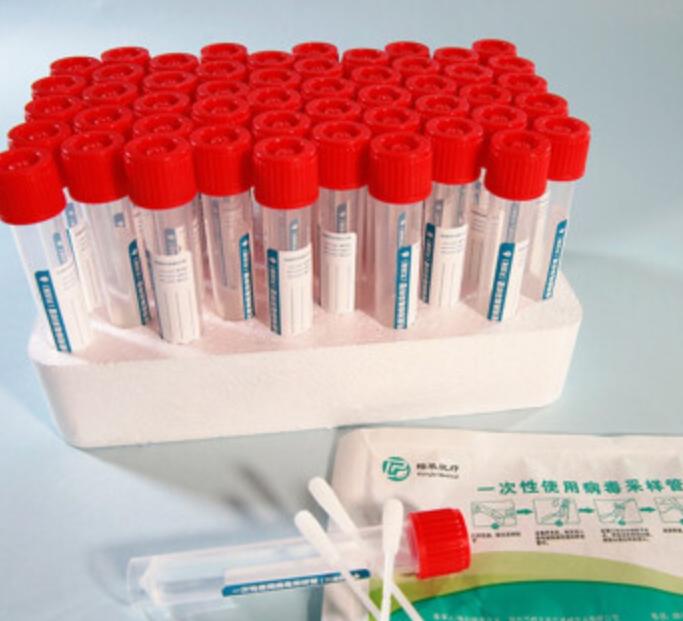
Standalone machines work well for low-volume clinical trials. Integrated lines dominate high-volume commercial production. The monoblock approach offers immense operational advantages. It combines filling and capping into a single compact frame. A combined reagent tube filling and capping machine shrinks your cleanroom footprint. Cleanroom real estate carries massive operational costs. Monoblocks reduce contamination risks moving between standalone stations. They also provide synchronized torque control for caps. Proper torque prevents leaks during global transport.
Standard laboratory models differ vastly from production-grade units. You should compare lab models against a heavy-duty pharmaceutical filler and capper. Pharmaceutical grades use 316L stainless steel for all fluid paths. This prevents rouging and corrosion. They include comprehensive validation documentation. IQ/OQ/PQ protocols prove the machine performs as specified. Regulators demand these documents during site audits.
End-of-line synchronization determines your true daily throughput. Your core filling unit must communicate smoothly. It needs to sync perfectly with upstream bulk liquid filling machine systems. Bulk systems supply the buffer tanks. The core filler must also pace downstream secondary packaging. Automated bottle labeling machine integrations remain crucial here. They handle regulatory tracking and batch serialization. Poor handoffs between these units cause severe line bottlenecks. Conveyor speed matching prevents tubes from tipping over.
Evaluating an IVD reagent tube filling machine requires deep technical scrutiny. Pump technology dictates fluid dynamics entirely. Peristaltic pumps keep the fluid path completely sterile. They utilize single-use tubing. This totally prevents cross-contamination between different reagent batches. Ceramic rotary or piston pumps serve a different purpose. They handle high-viscosity reagents exceptionally well. They provide extreme durability against abrasive suspensions. Ceramic pumps resist wear better than any other material.
Feature | Peristaltic Pumps | Ceramic Rotary Pumps |
|---|---|---|
Best For | Sterile, single-use fluid paths | High-viscosity reagents, suspensions |
Cross-Contamination Risk | Extremely low (disposable tubing) | Moderate (requires thorough CIP) |
Durability | Requires frequent tubing changes | Extremely high wear resistance |
Maintenance Cost | Ongoing consumable costs | High upfront, low ongoing |
Capping mechanism reliability represents another critical dimension. Assess pick-and-place versus rotary capping mechanisms. Pick-and-place systems offer exceptional torque accuracy. They grip each cap firmly before application. Rotary cappers achieve much higher operational speeds. Focus heavily on defect rejection rates. Missing cap detection is an absolute necessity. Rejecting faulty tubes automatically saves entire batches from spoilage. It prevents uncapped tubes from spilling inside the labeling station.
Sanitary design ensures strict GMP compliance. Physical features matter immensely inside ISO cleanrooms. Look for smooth cove radii inside the machine base. Eliminate all dead legs in the fluid path. Dead legs allow bacteria to harbor and multiply. Ensure the machine profile supports laminar flow hoods. Bulky machines disrupt downward air curtains. Blocked airflow compromises the sterility of your open tubes.
Rollout risks often hide in daily operator routines. Changeover friction causes massive hidden downtime. Swapping guide rails takes significant time. Changing star wheels often requires specialized tools. Adjusting pump nozzles slows production considerably. Tool-less changeover features mitigate these operational delays. You want operators switching formats in minutes, not hours.
Integration with LIMS and SCADA adds technical complexity. You need flawless data logging. FDA 21 CFR Part 11 compliance requires strict electronic audit trails. The software must log every operator login. It must record every parameter change. Real-time defect reporting ensures immediate quality control. Software validation often delays deployment if handled poorly by vendors.
Routine calibration prevents dosing drift over time. Peristaltic tubing stretches during continuous operation. This stretching alters the internal volume. It causes fill weights to drift out of specification. Maintenance teams need accessible wear parts. Hidden belts or buried sensors complicate simple repairs. Establish a strict preventative maintenance schedule immediately upon installation. Rely on data, not guesswork, to schedule parts replacement.
Mandate tool-less changeover parts for all primary product formats.
Test software audit trails thoroughly during the installation phase.
Stock critical wear parts locally before running production batches.
Failing to account for software validation in the project timeline.
Delaying operator training until the week of final commissioning.
Ignoring the stretching characteristics of peristaltic pump tubing.
Defining the User Requirement Specification (URS) is your vital first step. You must list your absolute non-negotiable metrics. Provide these directly to potential vendors early in discussions. Vague requirements lead to inadequate machine builds.
Include these core metrics in your URS document:
Exact viscosity range of all current and future reagents.
Minimum and maximum fill volumes expected.
Target tubes per minute (TPM) under normal conditions.
Specific cap types and their required application torque.
Cleanroom ISO classification constraints.
Available physical footprint and ceiling height restrictions.
Factory Acceptance Testing (FAT) proves actual machine capabilities. Do not skip this critical phase. Bring your actual production reagents to the FAT. If reagents are hazardous, bring exact viscosity analogs. Supply your proprietary plastic or glass tubes. Validate all vendor claims before authorizing equipment shipment. Finding a flaw at the vendor's facility costs nothing. Finding it on your cleanroom floor costs thousands.
Evaluate the vendor's total support infrastructure carefully. A great machine fails without rapid spare parts dispatch. You need localized technical support. Waiting days for an overseas technician is unacceptable. Comprehensive documentation ensures your team can troubleshoot independently. Ask for examples of their operational manuals. Assess their electrical schematics for clarity.
Selecting the optimal automated platform requires balancing micro-dosing accuracy with modular scalability. You must evaluate fluid dynamics, material handling, and integration capabilities simultaneously. Standalone units cannot match the efficiency of a synchronized, fully integrated packaging line.
Prioritize platforms featuring proven integration capabilities across filling, capping, and labeling stages. Robust compliance frameworks hold more value than raw output speed alone. Consistent, validatable production always outperforms erratic high-speed runs. Focus heavily on vendors who understand GMP and ISO cleanroom constraints deeply.
Audit your current changeover times immediately. Measure your exact reagent waste metrics over the next thirty days. Use this concrete data to build a highly quantifiable business case for your upcoming equipment upgrade.
A: Typical variance ranges fall between ±0.5% and ±1%. This depends heavily on the chosen pump technology and the target fill volume. Micro-liter volumes require high-precision ceramic or specialized peristaltic pumps to maintain acceptable variance limits.
A: Yes, provided it utilizes a modular capping station design. You will need interchangeable sorting bowls and adaptable capping heads to seamlessly switch between screw caps and press-in plugs during changeovers.
A: Integration relies on precise conveyor hand-offs and motorized pacing wheels. These components ensure tubes arrive spaced evenly. The machines exchange data constantly to handle accurate batch serialization and reject tracking across the line.
A: Clean-in-Place (CIP) uses chemical solutions to remove product residue automatically. Sterilize-in-Place (SIP) introduces superheated steam to destroy all biological contaminants. SIP is strictly required for highly sensitive diagnostic reagents demanding complete sterility.


